

As the week came to an end, I had planned on writing about something completely different. But, as I mindlessly scrolled through Facebook this afternoon, a headline caught my eye…
“Congress is finally talking about menopause.”
At first I thought it may be a false post or a lead magnet to something else, and to be honest I wasn’t all that interested… but as I read through the article, I noticed my heartstrings being pulled and my chest tighten as I realised that what had happened to me, and so, so many other women I’ve spoken with, is a real thing and much bigger than we think.
Big enough of an issue that the subject had been taken to the US Congress only days ago…
The RAND Corporation estimates that menopause symptoms result in around US$5.4 billion in lost productivity annually in the United States. And during the hearing, Senator Kirsten Gillibrand said that “as many as one in 10 women leave the workforce because of menopause.”
And here in Australia…
Research submitted to Australia’s Senate inquiry used UK findings to estimate what the impact could look like here. For each cohort of Australian women entering menopause, it estimated that around 20,000 may at some point move from full-time to part-time work, 10,000 may leave the workforce and later return, and 4,000 may retire early.
But importantly, the Senate inquiry later acknowledged that Australia still doesn’t have enough robust data to clearly separate the effects of menopause from the other factors that may contribute to women leaving the workforce in midlife.
And that got my attention.
Don’t worry, I am not about to recite these reviews and lengthy papers!
In fact, it made me want to talk about it…
After reading through all the Australian women’s testimonies that were submitted to the inquiry, my eyes filled with tears.
Because I felt their pain. I too lived their pain.
Here are a few brief examples of real-life menopausal women in Australia:
REAL WOMEN. REAL CONSEQUENCES.
One said, “While I have supportive managers and team (who I have not told the exact reason for my absences), I fear for my future career as I may need to reduce my work to part time to cope or wonder if I may need to consider leaving the workforce earlier than planned.”
Another woman stopped putting her hand up for career progression because she was frightened she couldn’t cope with the additional responsibility.
Another left a job she’d had for 15 years for a lower-level, less stressful position because brain fog, anxiety and other symptoms had destroyed her confidence in her ability to perform.
A teacher reduced her workload from full-time to relief teaching and eventually found she could only manage 2–3 days a week because of fatigue.
After reducing her hours, one lady spoke of her concern about having to be much more reliant on her husband’s earnings to support her now and in the future.
Another woman couldn’t afford the options her employer offered her because reducing her hours meant reducing the income she needed to pay her mortgage.
And then another described having to reduce to part-time hours through what she called the prime of her working life, ultimately being medically retired at 60 with inadequate superannuation.
How many of us have felt like these women?
Maybe you know someone who is facing the very same personal turmoil?
And I know firsthand how these women felt… stuck, ashamed, guilty, vulnerable, anxious, with a real fear for the future and a hell of a lot of confusion.
But worst of all, it’s the blaming of ourselves and thinking something is wrong with us.
Because, like me, after all the years of being fully capable and resilient, then suddenly not, it can shake the ground right under your feet and it can change the course of your life and livelihood.
Reading all of this genuinely saddened me.
But it also made me wonder…
What is really going on here?
Is it all perimenopause and menopause?
Not completely, no, I don’t think so…
I believe it is a horrible combination of our changing biology and physiology, the ripple effects of this and the symptoms interfering with our sleep, our brain, our energy and our capacity to tolerate what we once could.
It is also our ageing bodies, years of stress, workloads, family commitments, responsibilities, caring for others and, above all else, not understanding what is happening inside of us during midlife and how our lives play a significant part in this too.
Then it got me thinking:
What if we understood sooner?
What if we knew our changing capacity wasn’t proof we’ve suddenly become incapable?
What if we understood what perimenopause and menopause could affect?
What if we recognised when stress, sleep, workload, health or life circumstances were adding to it?
What if we felt able to ask for help before we reached breaking point?
What if workplaces understood what some women are navigating?
What if doctors had better education and women had better information?
And what if understanding allowed us to make decisions about our lives from a place of knowledge rather than fear?
But here’s what I do love in all of this…
More and more women are talking about it and sharing their experiences. And the more we do that, the less we will feel alone in our own circumstances, and the less likely we will be to blame ourselves and live with guilt and shame.
Just as I mentioned before, it really saddens me to read these articles that I stumbled across, but it also gives me hope that slowly the tides are changing and we are talking about this more.
Talking about it opens up opportunities for understanding…
Understanding reduces fear, guilt and shame…
And every conversation we have can lead to much better outcomes.
So yes, perimenopause and menopause are indeed part of the story, but there is a much bigger story underneath it all.
Just maybe it’s more about understanding ourselves in midlife.
Ang xx
Want to read more?
Congress is finally talking about menopause
RAND – The Economic Impacts of Menopause in the United States
Australian Senate Inquiry – Chapter 3: Impact on work and the economic consequences of menopause
Want to understand more about what may be happening in perimenopause?
Understanding Perimenopause is an evidence-informed and reflective workbook created to help you understand the changes happening in your body, mind and life, including topics such as capacity, tolerance, emotions and why you may not feel quite like yourself.
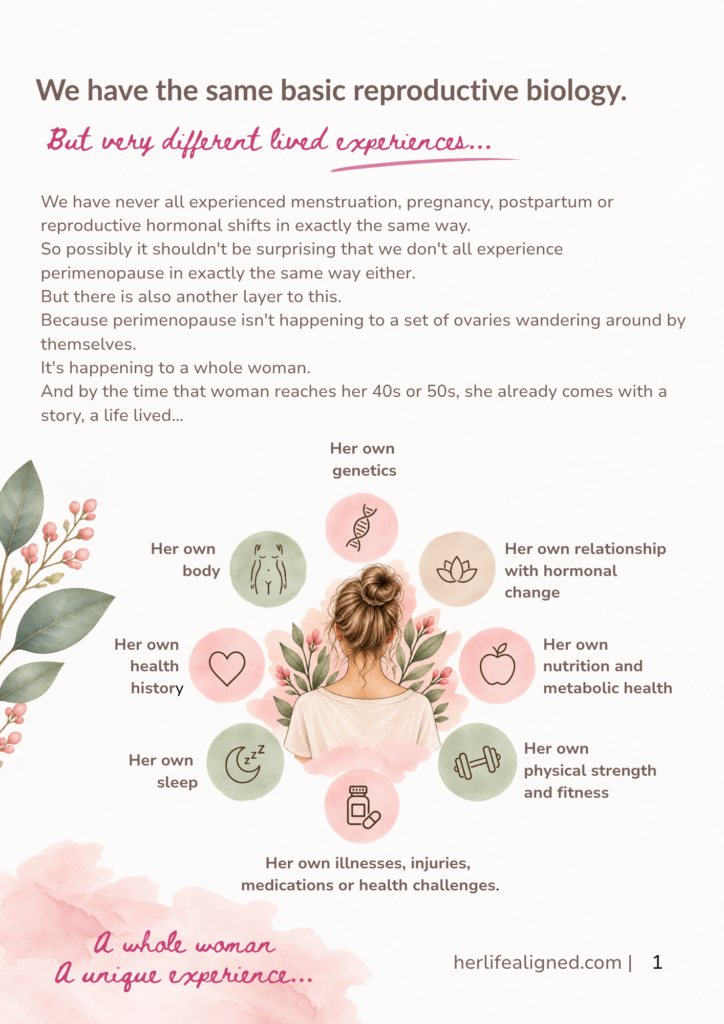
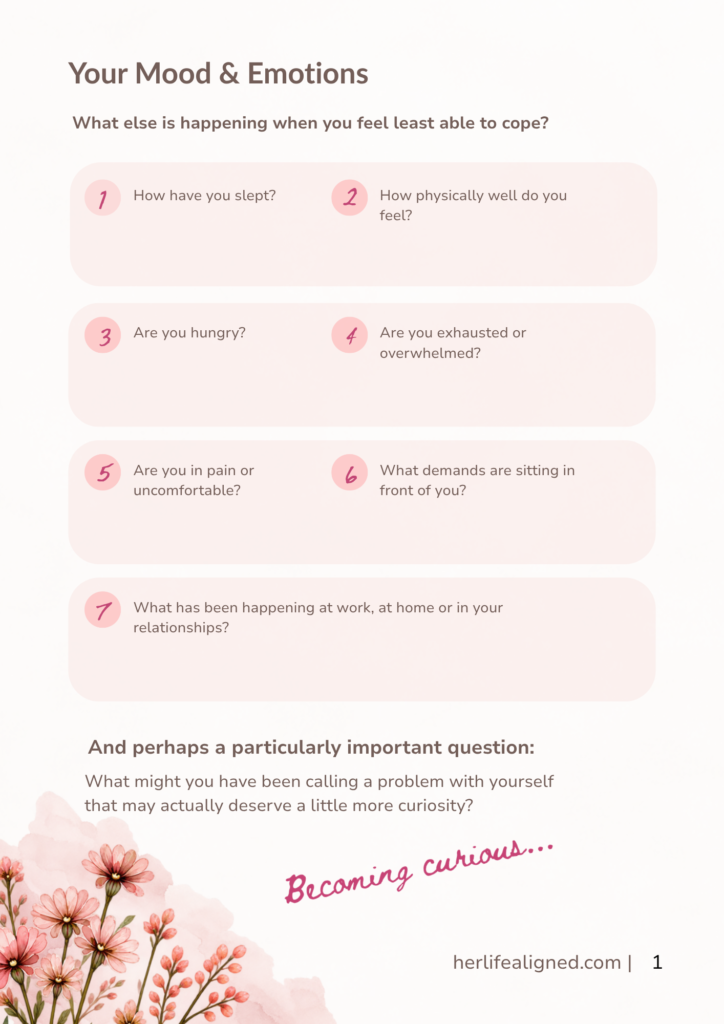
Understanding Perimenopause Digital Download – $29 New Release Offer



I can so relate to this. I retired early at the age of 51 feeling so guilty because I couldn’t cope with work and life. This was 22 years ago, and I felt so alone at the time, even though I had an understanding husband and family.
Kay, thank you for your comment and sharing your experience. I really feel for you 22 years ago and feeling alone. Even though 22 years later with so many voices and resources and research out there, somehow, somewhere we are still experiencing this as if time has never changed… I’d like to ask you something, related to your own experience. Do you think having had more understanding yourself around this topic, would that have made you feel less alone? xx